
Cast iron restoration
Carbon Buildup vs. Rust on Cast Iron: How to Tell
That rough old skillet may have cooked-on buildup, rust, or both. Here is what I look for before deciding what it needs, with a real square-skillet transformation from my workshop.
By Kerri Rundstrom · Rundstrom Restorations · 6 min read
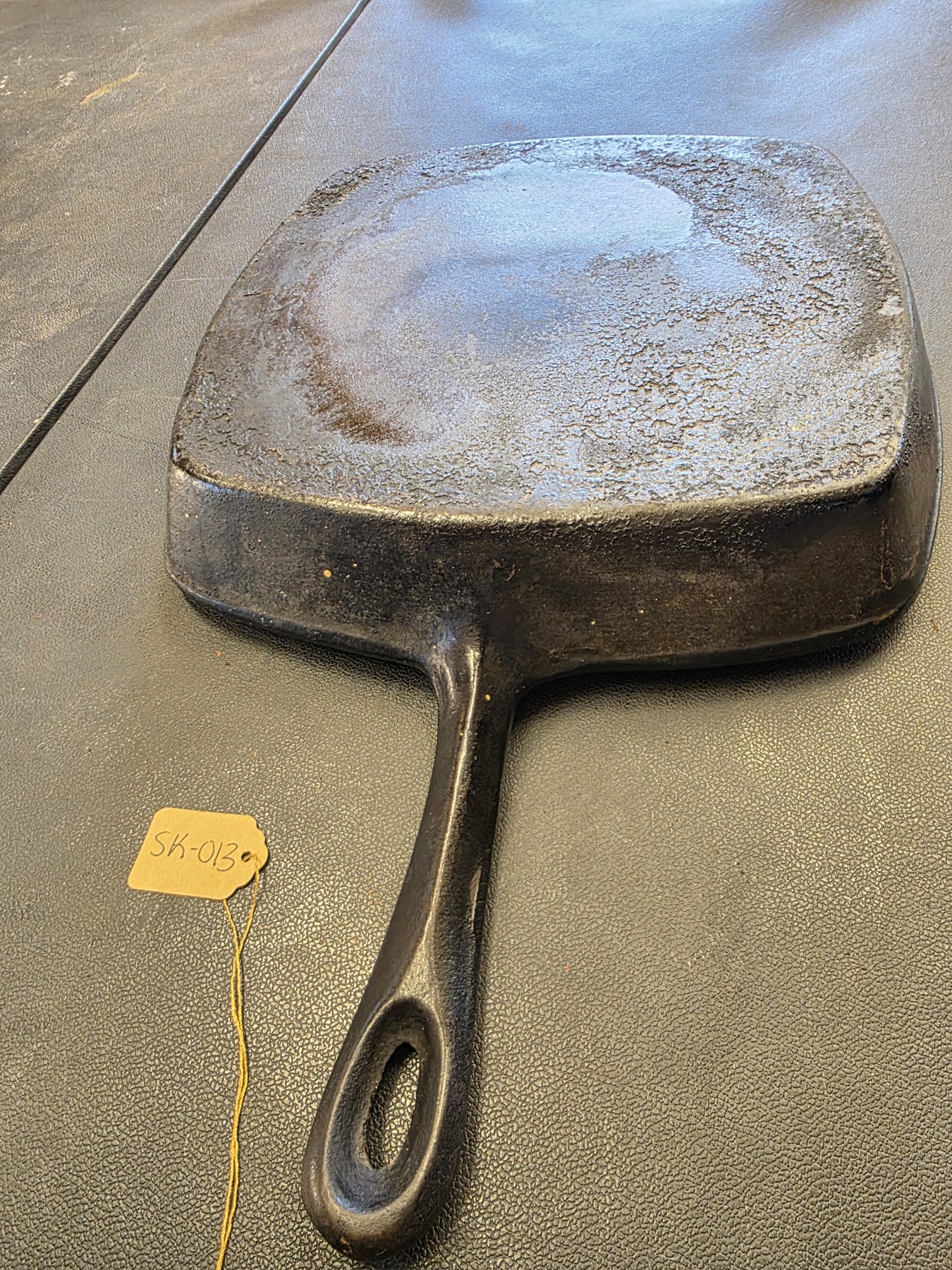
Rough does not automatically mean rusty
An old skillet can look pretty rough without being covered in rust. The square skillet above is a good example from my workshop. That thick, crusty layer was carbon buildup. Calling it rust would describe the wrong problem before the work even started.
When I say carbon buildup here, I mean the cooked-on accumulation of grease, food residue, and old coating that restorers often call crud. It is a practical workshop description, not a laboratory analysis of every dark flake.
The useful first question is whether you are looking at a layer sitting on the iron, corrosion affecting the iron, or a mixture. Color helps, but color does not get the whole vote.
What does carbon buildup look like?
Look for dark brown or black deposits that stand above the surrounding surface. They can form uneven crusts, raised patches, flaky edges, or thick layers that blur the outline of the base and hide markings. On this square skillet, the underside had a noticeably raised, broken-looking layer around a less heavily coated center.
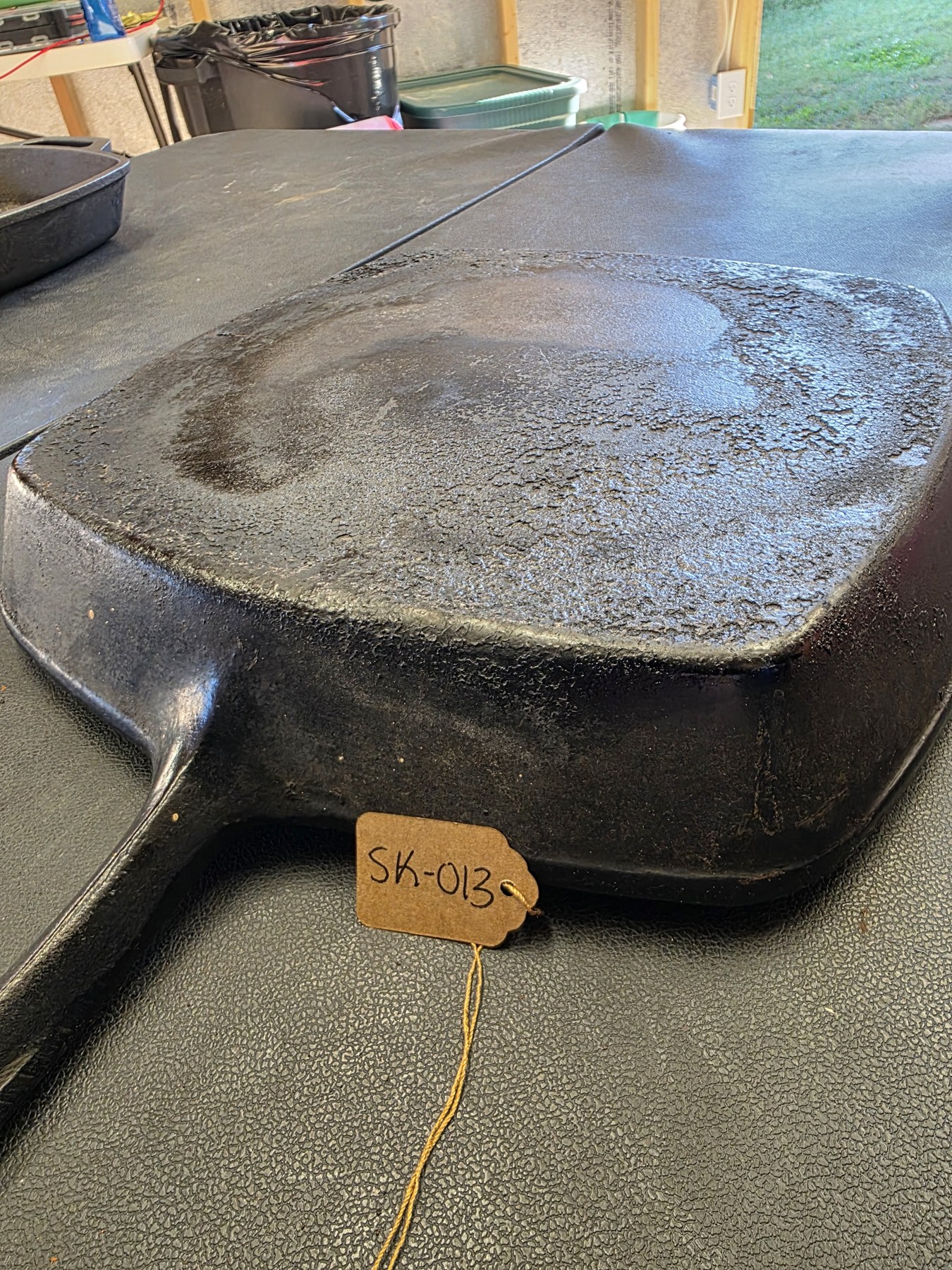
Repeated cooking can leave residue behind. Grease and food that are not fully removed can bake onto the surface through more heating cycles. Given enough accumulation, the pan ends up wearing considerably more than a useful finish. Apparently cookware can collect layers too.
Healthy seasoning is different. It is a thin, bonded coating formed from heated oil. A dark pan is not automatically dirty, and a textured casting is not automatically coated in carbon. Look for uneven deposits and layer edges rather than deciding that every black surface needs stripping. Bare and seasoned cast iron can also look very different without either appearance telling the whole condition story.
What does rust look like on cast iron?
Rust is corrosion of the iron. It commonly appears orange, reddish brown, or darker brown. Light surface rust can look dusty; more developed corrosion can have scale or flakes. Moisture exposure is a common cause, including leaving iron wet after washing or storing it somewhere damp.
That does not make orange versus black a foolproof identification test. Old coatings can be brown, lighting changes color, and rust can be darker than the familiar bright orange dust. Rust and old seasoning can both flake. Compare color, texture, raised deposits, exposed iron, and the piece's history together.
Also separate buildup from pitting. Buildup sits on a surface. Pits are depressions where metal has been lost. A rough area that remains after cleaning needs another look before deciding it simply needs more scrubbing. The photographs in this article show the carbon-covered square skillet and its restored appearance; they are not photographs of a rusty comparison piece.
Can a skillet have carbon buildup and rust?
Yes. A pan can have crusty deposits in one area and exposed, rusty iron somewhere else. Different surfaces on the same piece may need different attention. You do not have to force the entire pan into one category.
A thick coating also limits what you can inspect underneath it. Photograph what you can see, then reassess as cleaning exposes the surface. A less cluttered view is more information, not a guarantee that the iron underneath is sound.
That is a general inspection principle. It is not a claim that this square skillet had hidden rust. Its documented problem was heavy carbon buildup.
Why the distinction changes the restoration approach
Removing old organic buildup and dealing with rust are different jobs. Lye-based stripping is used for old grease and seasoning; it is not a rust-removal treatment. Very hard carbonized deposits can be stubborn even after the surrounding coating softens. Electrolysis is another restoration method used for corrosion and can also loosen buildup.
That is a reason to assess the surface first, not a recipe for putting every questionable pan into the strongest treatment available. Chemical stripping and electrolysis need suitable equipment, material checks, and their own safety procedures. Aluminum parts, plating, enamel, and other mixed materials change the decision.
For antique, heirloom, and customer pieces, my aim is to remove deposits while preserving the original casting. Grinding the pan smooth to get rid of a rough-looking patch can remove original iron and markings. I would rather understand the rough patch first. You can read more about our restoration process and shortcuts I avoid.
What the square-skillet transformation actually shows
The before photographs and the restored view below show the same square skillet. The thick deposits visible on its underside are gone in the later view, and the casting's surface is much easier to see. The useful comparison is the crust around the base before restoration and the exposed casting texture afterward.
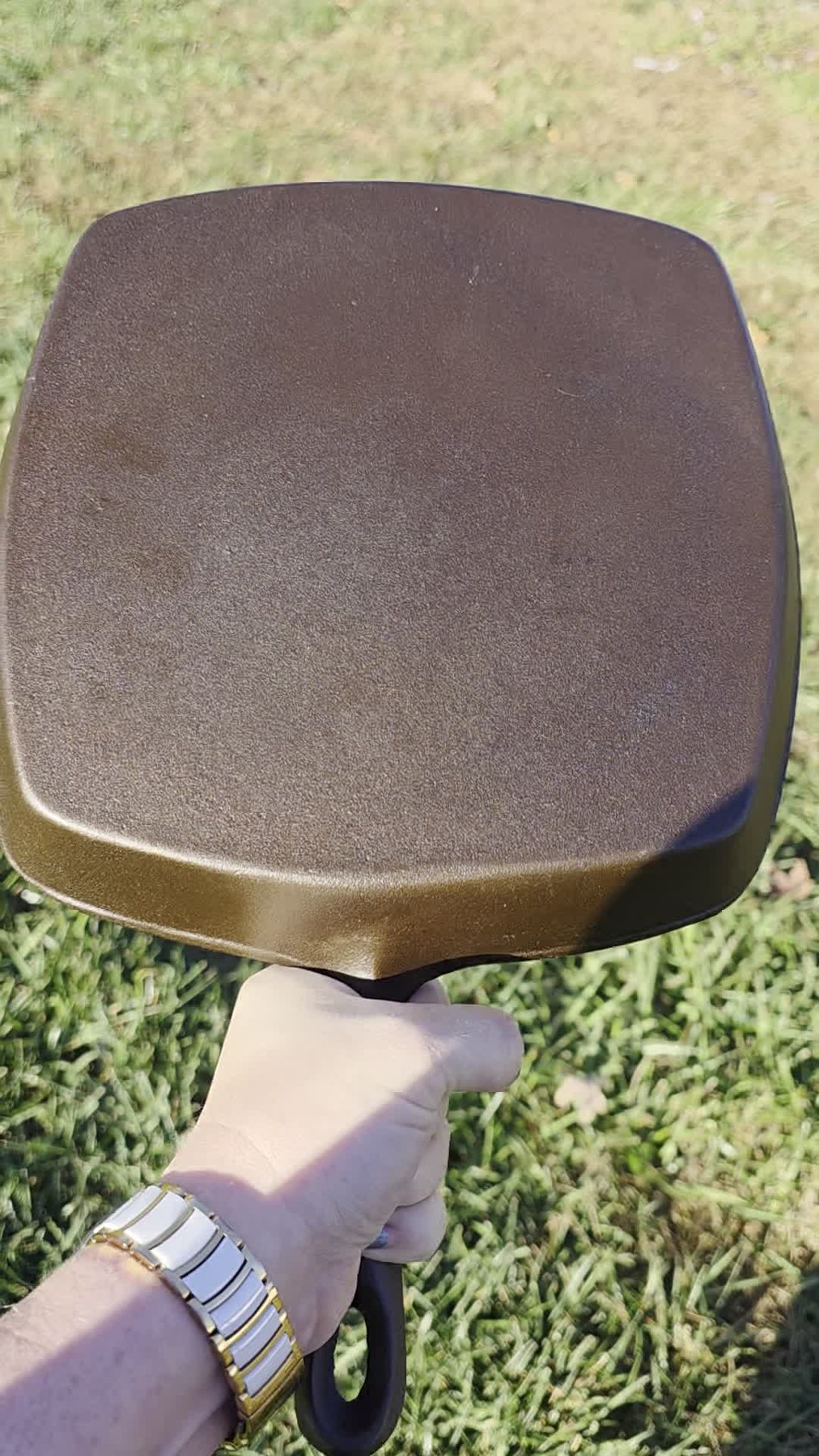
The after image is a still from my original restored-skillet video. The lighting and camera angle differ from the intake photographs. Compare the raised deposits and visible surface rather than treating a change in color or shine as a measurement.
These pictures do not establish a maker, an exact age, a crack-inspection result, or cooking suitability. Appearance alone cannot establish whether cookware is safe to use, and cleaning or seasoning does not settle an unknown history. A good-looking reveal and a complete condition assessment are separate things.
What should you inspect before restoring an old skillet?
Start with a cool, dry piece and good light. Photograph the cooking surface, underside, sides, handle, and any marks before treatment. Then work through these questions:
- Is the roughness a raised deposit, loose scale, a pit, or the casting's original texture?
- Are there visible cracks at the rim, walls, base, or handle junction? Inspect again as deposits are removed.
- Does the pan rock on a stable, flat reference surface? Buildup on the base can complicate that first check; reassess after cleaning.
- Are there coatings, plating, non-iron parts, repairs, or an unknown use history that need investigation before treatment?
- Which observations are clear, and which need better photographs or an in-person assessment?
When should you ask for a restoration assessment?
If you see a suspected crack, deep corrosion, a damaged handle attachment, a repair, an unfamiliar coating, or evidence of unknown non-cooking use, pause before treating the piece as cookware. An experienced restorer can help assess the visible condition and appropriate next step; restoration cannot certify away every uncertainty. A family piece is also a perfectly reasonable reason to ask for help before experimenting.
You do not need to diagnose everything before contacting me. Send photographs for a restoration assessment, along with what you know about the piece and what you hope to do with it. I can start with crusty. What matters is figuring out what belongs to the pan and what is merely sitting on top of it.
Sources and further reading
Over to you
What part of this story reminded you of your own cast iron, and what would you like us to explore next? Tell us in the comments below.
From the workshop
Before you strip that skillet…
Get our free Cast-Iron Rescue Checklist: what to inspect, which problems need treatment, and when to stop before the pan pays for your enthusiasm. Sign up below for an immediate PDF download and future workshop updates. Email delivery is not active yet.
Join the conversation
Questions, comments, questionable skillets?
Ask a question or tell us what you're working on. Comments are reviewed before appearing. Please leave personal contact details out.
Loading comments…